
One vendor, local crews.
Decommissioning is an event. Maintenance is every week for as long as the facility runs, and it is where a data center either becomes part of the local economy or becomes a standing order for out-of-state contractors.
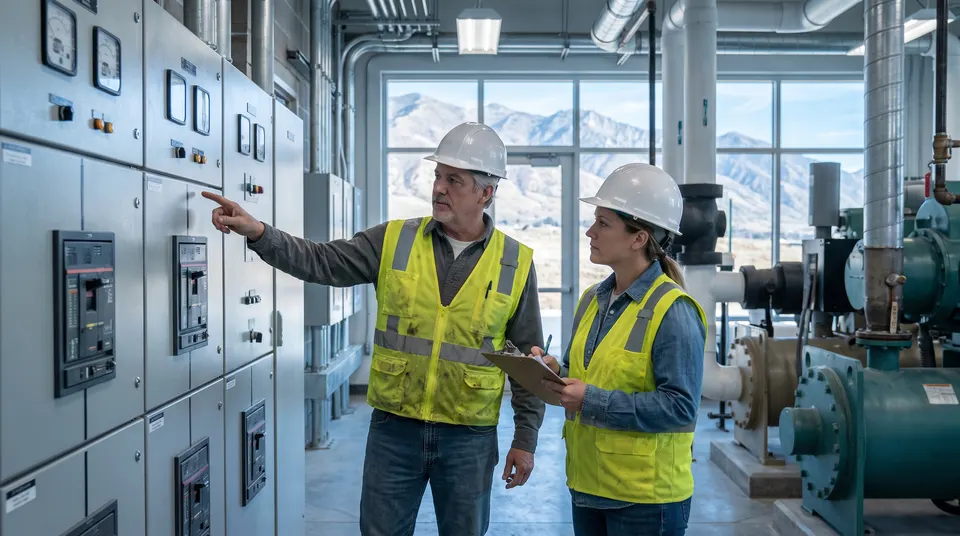
The rotating cast problem.
Facility work tends to accumulate as a pile of separate relationships: one company for janitorial, another for grounds, another for general trades, a fourth that only shows up when something specific breaks. Each has its own scheduling, its own invoicing, its own badging process, and its own idea of what documentation means.
None of them know your site. Every callout starts with a stranger being escorted past the same cabinets and asking the same questions, and every audit starts with someone on your team reassembling a year of activity from four different email threads.
We consolidate that into one relationship staffed by vetted local crews. Same people, same site knowledge, same badging record, and one place the documentation lands. The providers are businesses in your own market, which is also why this service shows up in the quarterly impact report rather than only on an invoice.
What the crews cover
- Scheduled preventive rounds against your maintenance calendar
- General trades: doors, hardware, sealing, patching, and finishes
- Grounds, exterior, and seasonal weather response, snow included where your market gets it
- Janitorial and data-hall-appropriate cleaning protocols
- Callout response for the things that do not wait for a scheduled visit
- Coordination and escort support for specialist contractors on site
One relationship, three habits.
A crew that stays
Continuity is the whole product. A crew that has worked your site for two years knows which door sticks, which drain backs up in a thaw, and which cabinet row is never to be leaned against. That knowledge does not survive vendor churn.
One point of contact
Scheduled work, callouts, and quotes all come through the same coordinator. You are not the integration layer between four contractors, and nobody is arriving at your gate unannounced because a subcontractor forgot to tell you.
Documented as it happens
Every visit is recorded: who was on site, what was done, what was found, what is outstanding. Written at the time, not reconstructed in the week before an audit from memory and invoice stubs.
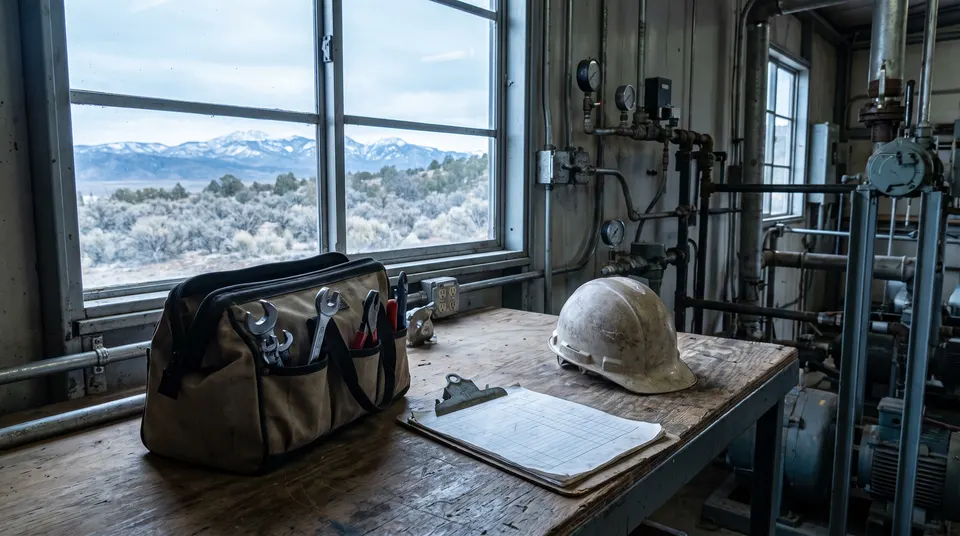
Audit-ready by default.
Compliance work is only painful when the evidence has to be manufactured after the fact. Because every visit lands in one system as it happens, an access history or a twelve-month maintenance record is a report rather than a project.
The same discipline runs through every service we orchestrate. Providers pass verification before they hold a badge, and their credentials are attributed by name, facility, and expiry at our verification standard. When a maintenance visit intersects with asset movement, it lands on the same record as the logistics manifest, so the two never have to be reconciled by hand later.
Maintenance is also the steadiest line in the local sourcing model, because it recurs. Its share of the routing is described at the local sourcing program.
Consolidate the standing work.
Send us your current maintenance scope and the vendors delivering it today. We will show you what it looks like as one local relationship, and what it puts back into the community around your facility.