
Every routed dollar, counted.
This is the part that makes the other five different from any national vendor. The work goes to verified providers local to your facility, and what that routing produces in jobs, wages, and local spend gets measured and published on a schedule.
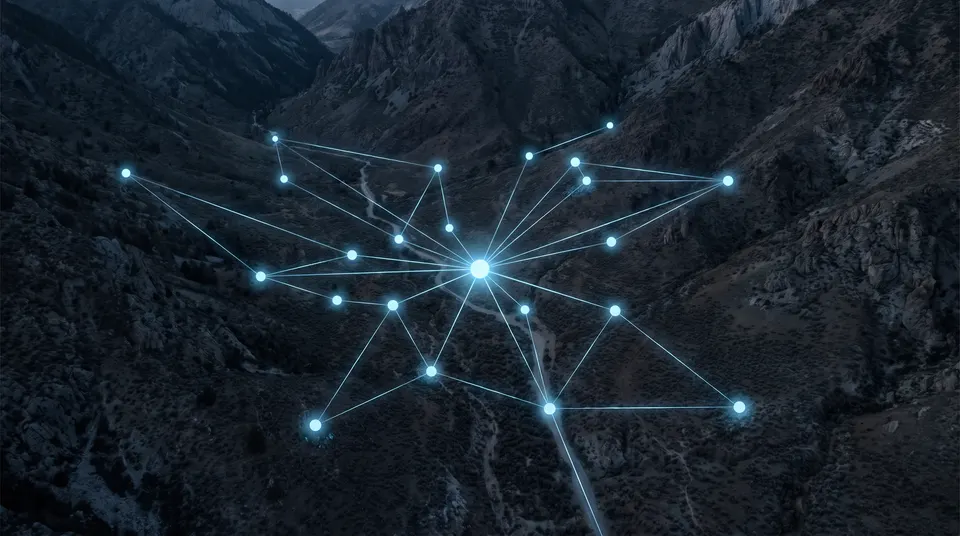
How routing works
You send one request. Behind it, the work is matched to a provider by capability, capacity, and proximity to your facility, in that order. Capability first because a crew that cannot work a live hall is not a cheaper option, it is a different service. Proximity last, but it decides most matches, because the qualified providers are usually the local ones.
Nobody in the network receives routed work before they have passed verification. Credentials are checked at the source and attributed by name, facility, and expiry at our verification standard. NexWave is the orchestrator, not a certified processor: the certifications belong to the facilities that hold them, and every certificate is issued by the certifying facility that performed the work.
Once work is routed, we hold the custody documentation across every handoff and assemble it into one record. You keep a single relationship. The community gets a dozen.
Identified, a local business in the category but not yet engaged
In verification, credentials being checked at the source
On the wire, verified and receiving routed work
A provider only reaches the third state once verification is complete. It is the same notation used across this site, so the diagram doubles as its own legend.
Six categories of local business, engaged by one facility.
In the illustrative model, a single 100MW facility routing its outbound work locally engages 12 local businesses across these categories. Not one large vendor with a regional office, but a dozen separate companies with their own payrolls, insurance, and tax filings in the county.
Logistics and transport
Carriers, rigging crews, and dispatch capable of working a live data hall on a change window.
Secure storage
Access-controlled facilities that can receive at the serial level and hold assets under inventory.
ITAD and processing
Verified R2v3 certified processors performing sanitization, destruction, and remarketing.
Recycling
Certified recyclers taking end-of-life material to documented final disposition.
Facility maintenance
Local crews covering scheduled work, callouts, grounds, and trades under one relationship.
Professional services
The supporting local spend around a project: specialist trades, inspection, and site support.
Illustrative model: 100MW facility.
What we check before we route.
NexWave is an orchestrator. The value of that role rests entirely on the rigor of what happens before a work order leaves our hands, so the process is published and an operator can audit it.
It applies to every business that receives routed work, in every category, and it is a gate rather than a preference. A provider that has not completed verification receives nothing, regardless of price, availability or relationship. There is no provisional tier and no exception path, because the whole point of an orchestrator is that you inherit our diligence instead of repeating it.
Certificates, read at the source
We look the provider up directly in the issuing body’s certified facility directory and read the record there: the certified legal entity, the facilities covered, the certification version, and which appendices are in scope. R2v3 appendices matter operationally, because a facility certified for data sanitization is not automatically certified for materials recovery. We record the version explicitly as R2v3, never as a bare family name, and we keep a facility level list of which certificates are live at which address. Work is routed to a certified address, not to a certified brand.
Insurance, read at the carrier
Certificates of insurance come from the carrier or broker, not from the provider’s marketing folder, and are read for the coverages the work actually requires: general liability, auto liability for transport, cargo coverage at a limit appropriate to the asset value moving, workers compensation, and professional or cyber liability where data bearing assets are handled. Limits, named insureds and effective dates are recorded, and expiry is monitored on the same calendar as certifications.
Expiry, downstream chain, and re-verification
Every certificate carries its expiry date and every expiry is monitored on a calendar rather than remembered. A lapsed certificate suspends the provider from routing until the renewed document is in hand and confirmed at the issuing body. An expired credential presented as current is the most common failure in this industry, and it is trivially preventable.
A verified provider that sends material to an unverified downstream vendor has simply moved the risk one step further from view, so each provider discloses its downstream chain for the streams we would route and those parties are reviewed against the same criteria. Where a stream terminates outside the chain we can review, that is documented as a limit of our verification rather than left implicit. Verification is a state, not an event: everything is re-confirmed at the source annually at minimum, and immediately on a certificate approaching expiry, a change of facility or legal entity, or any incident on routed work.
The attribution rule
A credential never renders as a bare badge. Anywhere NexWave displays a provider’s certification, in a proposal, in a report or on this website, it appears with the owner that earned it, the facility it covers, and the date it expires. A logo wall tells a reader nothing about who holds what, and on an orchestrator’s site it actively implies the orchestrator holds them.
Format example only; the bracketed fields are placeholders. A provider is named once its record has been read at the issuing body, and not before.
What every provider must hold
Our standard, in writing: every provider in the network is certified for its category and carries insurance we verify with the carrier, before a single work order is routed.
- R2v3Responsible recycling
- ISO 14001Environmental management
- NAID AAAData destruction
- InsuredVerified with the carrier
Required of every provider before work is routed. NexWave is an orchestrator and holds no processing certifications of its own; each credential is attributed to the provider and facility that holds it.
Run a logistics, secure storage, maintenance, ITAD or professional services business and think you clear this? Tell us about your facility.
How a routed dollar gets counted
Routing work locally is worth nothing to your community affairs team if nobody can show it happened. So every routed engagement carries four attributes from the moment it is dispatched: the provider, the category, the value, and the location where the work was performed.
Those four fields are what the quarterly impact report is built from. Local spend is the sum of routed value where the performing provider is local to the facility the work came from. Jobs and wages are derived from that spend using a named input-output methodology rather than a multiplier we invented, and the methodology is published in full at how we count, including what it cannot claim.
Until a facility is live and routing, every figure on this site is an illustrative model of a 100MW facility rather than a NexWave result, and it is labeled that way everywhere it appears. That is the point of the label. Numbers that arrive without their basis attached are the reason communities stopped believing data center promises in the first place.
- ProviderWhich verified local business performed the work.
- CategoryWhich of the six categories the engagement falls in.
- ValueThe dollar value of the work that was routed.
- LocationThe county the work was actually performed in.
A record missing any one of the four does not enter the report.
The ripple, stated as numbers instead of adjectives.
One illustrative 100MW facility, with its outbound service work routed to verified local providers, supports 153 annual local jobs and $14.1M in local wages, inside $26.4M of total annual local economic impact.
Illustrative model: 100MW facility.
See what your facility would route.
An impact assessment maps your current outbound spend against the local providers who could take it, and shows what the first quarterly report would say.