
E-waste that stays local.
Some of what leaves a data hall has no second life. It still has an ending, and that ending should be a named certified recycler in your own metro with a receipt attached, not a container leaving the state and a vendor telling you it was handled.
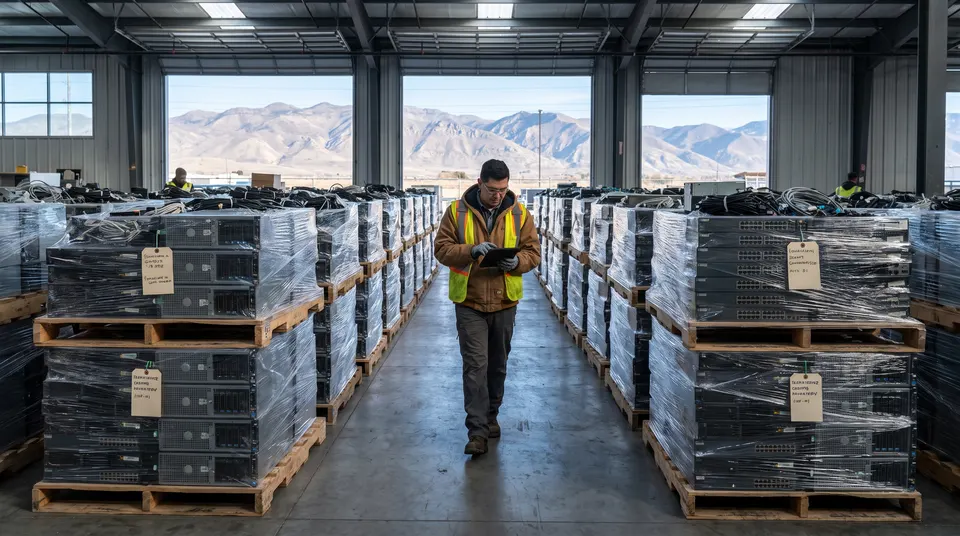
Where end-of-life equipment actually goes.
Every asset that comes out of a decommission ends in one of two places: remarketed to a second owner, or broken down for materials recovery. The remarketing half gets all the attention because it returns money. The recycling half is where the reputational risk lives.
Electronics contain both value and hazard: copper, aluminum, steel, and precious metals on one side, lead, mercury, and lithium cells on the other. Handled at a certified facility, that mix becomes recovered commodity streams and properly managed hazardous fractions. Handled badly, it becomes a landfill entry or an export container with your asset tags still on it.
We route the recycling half to certified local recyclers, and we name the facility in your record. Assets arrive there from the disposition stage on the same manifest they left your dock on.
What we route to recycling
- Servers, chassis, and network gear with no remaining market value
- Failed and physically destroyed drives after sanitization
- Cabling, rails, cable management, and rack hardware
- UPS batteries and power distribution components
- Packaging and pallet material generated by the project itself
Anything data-bearing is sanitized or destroyed by a verified R2v3 certified processor before it reaches a recycler, with the certificate issued by the certifying facility that performed the work.
Distance is the enemy of documentation.
Fewer handoffs to lose
A container that crosses three states passes through brokers and consolidators, and each one is a place the chain of documentation can thin out. A short leg to a named local facility has one handoff and one receiving signature.
A facility you can visit
When the recycler is in your metro, an audit is a drive rather than a request for documentation from a company you have never met. Downstream verification stops being a paperwork exercise.
The jobs stay here
Recycling and processing labor is real employment. Routed locally it counts as local employment, and it appears in the quarterly report alongside every other routed dollar. How we count.
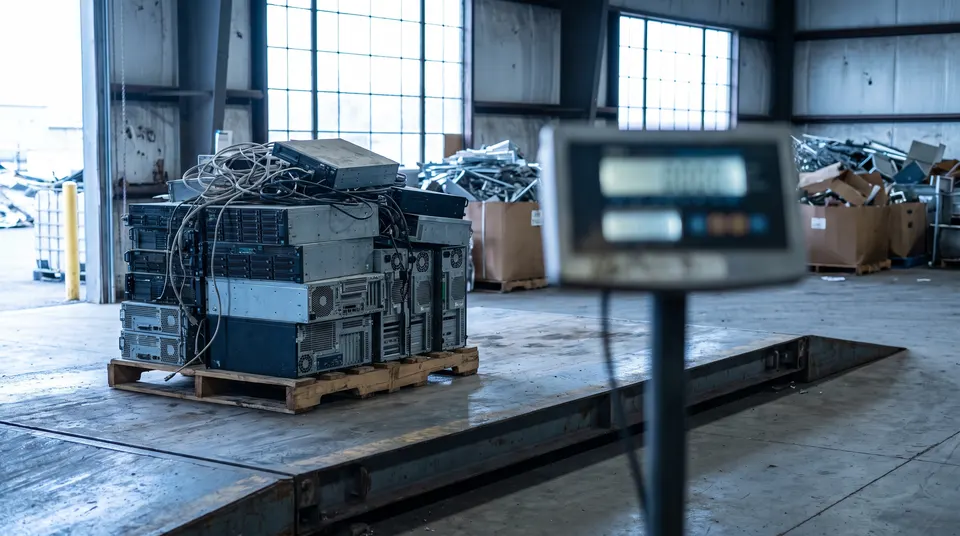
Documented to final disposition.
Landfill diversion only counts if someone recorded it. Your record shows what arrived at the recycler, which facility received it, and what happened to it there, closing the loop that started with the decommissioning manifest.
As with everything else in the network, NexWave is the orchestrator, not the processor. The recycler holds its own certifications, issues its own certificates, and is attributed by name, facility, and expiry at our verification standard. We are accountable for routing the material there, for the custody documentation along the way, and for assembling the result into one record instead of five.
If your sustainability team already reports diversion, this is the input they have been asking your vendors for. If they do not yet, it is the reason they will start.
Know where your e-waste ends up.
Tell us what you retire in a typical year. We will show you which certified local facilities would receive it and what the disposition record looks like.