
Six services, one local partner.
Everything that leaves your data center, and everything that keeps it running, handled through one accountable relationship and delivered by providers based in your facility's own market.
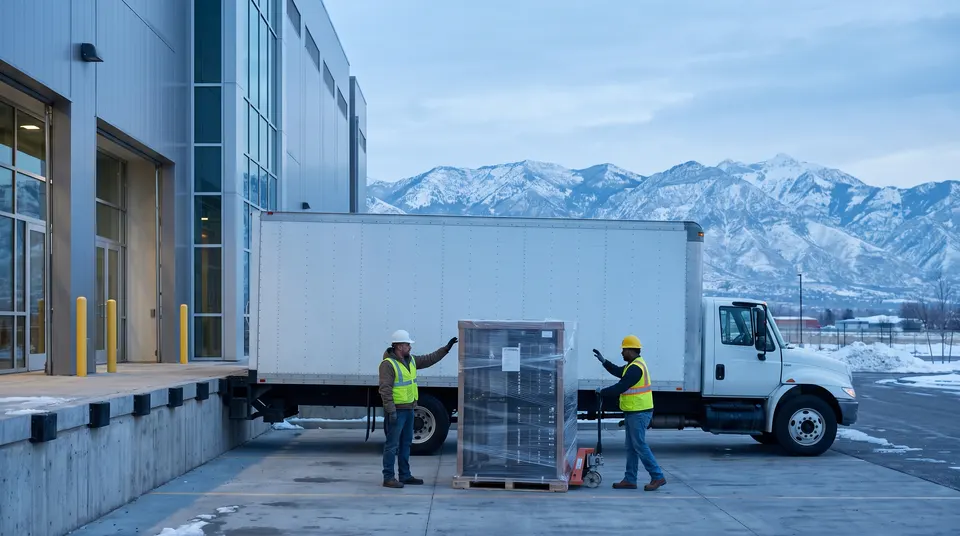
Outbound work is where the local economy actually happens.
A data center employs a small permanent staff and buys a very large amount of service work: freight, rigging, storage, decommissioning, recycling, and maintenance. That outbound work is where the jobs and the local spend live, and it is the part most often imported from out of state.
NexWave is the single point of accountability for all of it. We do not operate the processing facilities ourselves. We route the work to local providers who have been verified against a published standard, hold the documentation together across every handoff, and report what the routing produced.
That distinction matters for how you read this site. Certifications belong to the facilities that hold them and are attributed by name, facility, and expiry at our verification standard. What NexWave owns is the routing, the custody, and the count.
Pick the one you need. They all run on the same spine.
Data center logistics
Insured, GPS-tracked transport between your dock and every downstream facility, with rigging and dock coordination handled by crews who already work in data halls in your market. One dispatcher, one manifest, one accountable chain of documentation across every handoff. Your loading dock stops being a scheduling problem.
Secure storage
Access-controlled warehousing for assets that have left the rack but are not ready for disposition. Everything is received and inventoried at the serial level, so a refresh that arrives in one week and disposes over three months never loses track of a single unit.
ITAD and decommissioning
Rack to dock decommissioning: audit, de-rack, transport, sanitization, and final disposition. Data sanitization and physical destruction are performed by verified R2v3 certified processors in our network, and the certificates are issued by the certifying facility that did the work.
E-waste recycling
End-of-life electronics that cannot be remarketed are routed to certified local recyclers instead of leaving the state on a truck. Diversion from landfill is documented to final disposition, and the recycler is named in your report rather than described as a category.
Facility maintenance
Ongoing maintenance delivered by local crews under one vendor relationship instead of a rotating cast of out-of-state contractors. Scheduled work, callouts, and documentation land in the same system, so an audit request does not become a week of email archaeology.
The local sourcing program
The engine underneath the other five. How a request gets routed to a vetted provider local to your facility, how that provider was verified before it touched an asset, and how every routed dollar gets counted so your community affairs team has something real to publish.
Route. Verify. Quantify.
Route
One request, one dispatcher, and the work lands with a local provider instead of an out-of-state vendor. How routing works.
Verify
Every provider passes the published verification standard before it touches an asset, with credentials checked at the source. Read the standard.
Quantify
Jobs, wages, and local spend counted with a named methodology and delivered quarterly. How we count.
Routed locally, an illustrative 100MW facility supports 153 annual local jobs across 12 local businesses and $14.1M in local wages.
Illustrative model: 100MW facility.
Start with one service or all six.
Most operators start with a single decommissioning project and add the rest once the first report lands. Tell us what is leaving your floor this quarter and we will scope it, with the methodology attached.