
Storage that stays accountable.
Between the moment a rack comes down and the moment its assets are wiped, sold, or recycled, the equipment has to live somewhere. Somewhere access-controlled, inventoried to the serial number, and reachable on your schedule rather than a warehouse crew’s.
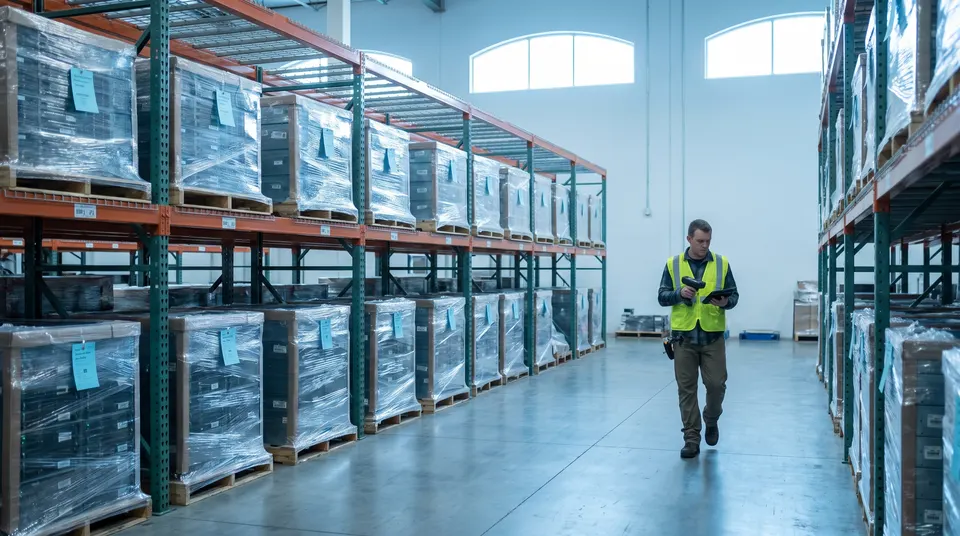
The gap nobody plans for
Decommissioning happens fast and disposition happens slowly. A refresh clears two hundred units out of a hall over a single weekend, but remarketing those units, sanitizing the drives, and settling what gets recycled can run for a quarter. The schedules almost never line up.
Operators fill the gap in one of two bad ways: leave the equipment stacked in a staging room that was never meant to hold it and is now a floor-loading and fire-code conversation, or ship everything out of state on day one and lose the ability to pull a unit back when someone realizes it was still in service.
Secure storage is the third option. Assets leave your floor immediately on insured, GPS-tracked transport, land in a local access-controlled facility, and wait there under inventory until disposition is actually ready for them.
What storage covers
- Serialized receiving against the inbound manifest, unit by unit
- Access-controlled space with logged entry and camera coverage
- Segregated, sealed handling for data-bearing media pending sanitization
- Staging and kitting for phased disposition or redeployment
- Retrieval on request, including pulling a specific serial back to your dock
- Inventory reporting that reconciles to the original decommissioning manifest
An inventory is only useful if it goes down to the unit.
Received at the serial level
Every asset is scanned in against the manifest that left your dock. A pallet count tells you nothing when an auditor asks about one specific drive. A serial-level record answers the question in a search rather than a warehouse walk.
Media handled separately
Drives and other data-bearing media are segregated and sealed on intake, stored apart from the chassis they came out of, and released only to the certified processor that will sanitize or destroy them.
Reconciled on the way out
Nothing leaves storage without matching an outbound record back to the inbound one. Variances are surfaced while the asset is still in the building, which is the only time they are cheap to resolve.
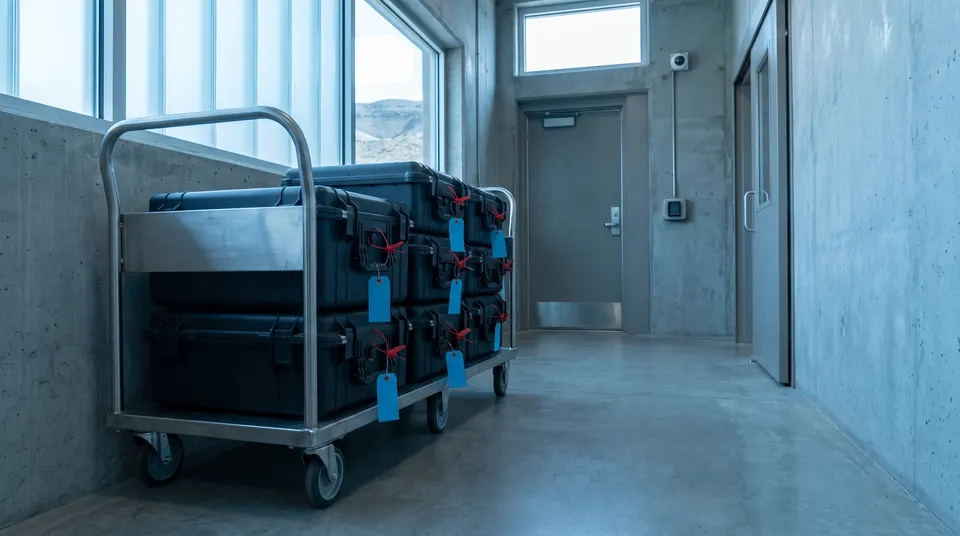
Who actually holds your equipment?
NexWave orchestrates storage across vetted local facilities rather than operating a warehouse of its own. That is a deliberate structure, and it changes what you should expect us to prove.
We are accountable for the routing, the custody documentation, and the fact that the facility holding your assets passed verification before it took delivery. The facility itself is named in your records, with its credentials attributed by name, facility, and expiry at our verification standard. Where downstream sanitization is involved, that work is performed by verified R2v3 certified processors in the network and the certificates are issued by the certifying facility that performed it.
Keeping storage local also keeps the money local. Storage and processing roles are two of the categories counted in the quarterly report, and the arithmetic behind that count is published at our impact methodology.
Need somewhere for it to land?
Tell us the unit count and how long disposition is likely to take. We will scope the storage window, the intake process, and the retrieval terms in the same conversation.