
Rack to dock, documented.
Decommissioning a data hall is a data security problem wearing a logistics costume. We run the whole lifecycle, from the audit to the final disposition receipt, through verified local processors who can prove what they did.
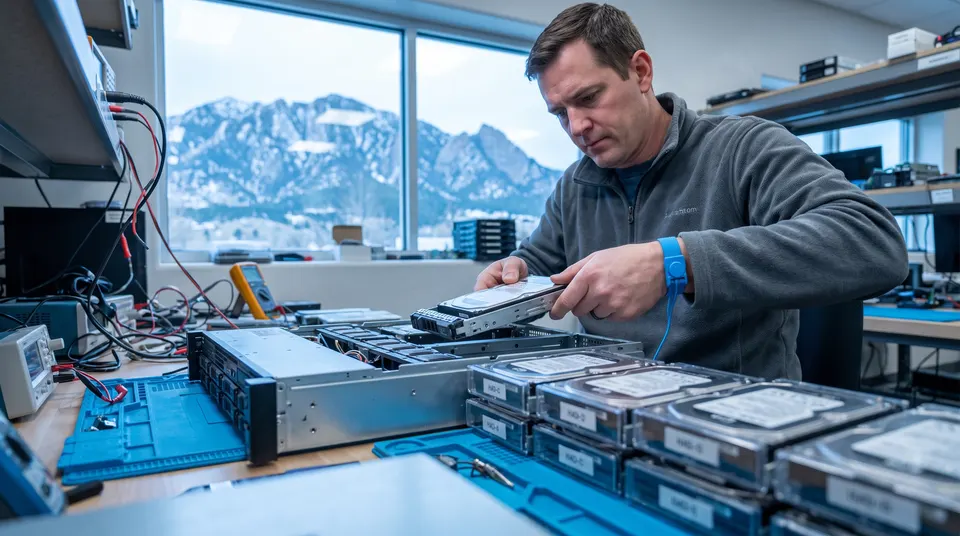
What is data center decommissioning?
Data center decommissioning is the controlled retirement of IT infrastructure from a live facility: auditing what is there, disconnecting and removing it without disturbing what stays running, and disposing of every asset in a way that can be proved afterward. IT asset disposition, or ITAD, is the second half of that job, the part that decides where each unit ends up and produces the evidence.
The two are usually sold separately, which is why they usually go wrong together. A rigging crew that does not handle media leaves drives in a chassis. A disposition vendor that never saw your floor cannot reconcile its intake to your manifest. The seam between them is where assets and paperwork both go missing.
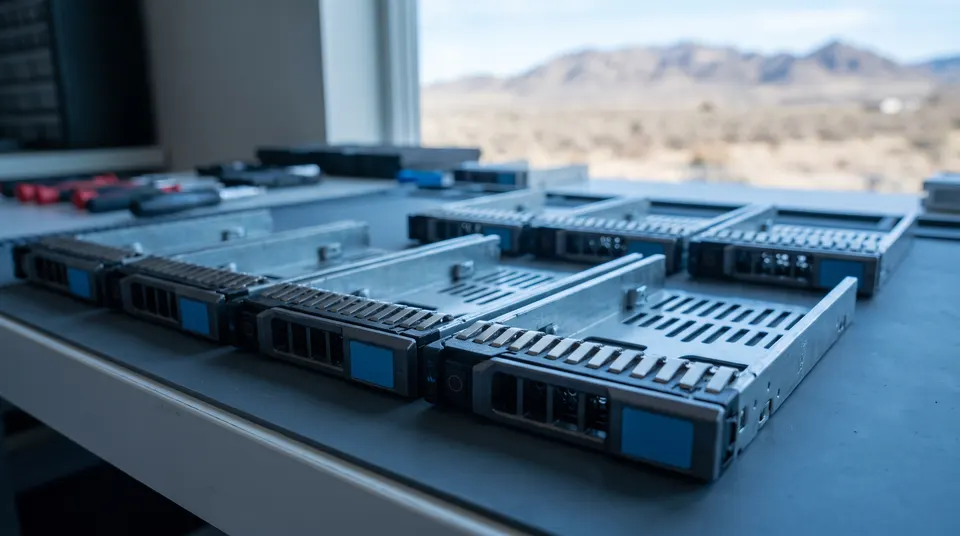
Six stages, one accountable party across all of them.
Audit and plan
A physical inventory of what is coming out, captured to the serial number, plus the constraints around it: change windows, floor loading, elevator capacity, and which units are still carrying regulated data.
Disconnect and de-rack
Power down, cable pull, and de-installation in a sequence that keeps adjacent live equipment running. Media is separated and sealed in the room it was pulled in, which is the only moment separation is cheap.
Pack and transport
Palletized, labeled to the manifest, and moved on insured, GPS-tracked carriage with a custody signature at every handoff.
Intake and storage
Serialized receiving that reconciles to the manifest that left your dock, then access-controlled storage while disposition works through the queue.
Sanitize or destroy
NIST 800-88 sanitization or physical destruction, performed by verified R2v3 certified processors in the network, with the certificate issued by the certifying facility and recorded per serial.
Remarket, recycle, report
Units with residual value are remarketed and the recovery is settled to your project. Everything else goes to certified recycling. Both endings arrive in one audit-ready record.
Stages three and four are data center logistics and secure storage, and stage six routes through certified local recycling. You can buy any of them alone. Bought together, they share one manifest.
Data sanitization, and who performs it.
Sanitization follows NIST 800-88 media sanitization methodology, which sorts every method into clear, purge, or destroy and matches it to the media type and the sensitivity of what it held. The method chosen for each serial is recorded, not assumed.
That work is performed by verified R2v3 certified processors in our network, and certificates are issued by the certifying facility, never by NexWave. We are the orchestrator: we own the routing, the custody, and the assembled record. Every credential is attributed by name, facility, and expiry at our verification standard.
A certification never renders as a bare badge here. It renders as the row above, with an owner, a facility, and an expiry, because a badge with no owner is how a broker borrows someone else’s compliance.
Straight answers.
Is NexWave itself R2v3 certified?
No, and we will not imply otherwise. NexWave is an orchestrator. Sanitization, destruction, and recycling are performed by verified R2v3 certified processors in our network, and every certificate is issued by the certifying facility that performed the work. Each credential is attributed by name, facility, and expiry at our verification standard.
What happens to the data on the drives?
Media is segregated and sealed at the point of pick and released only to the processor that will sanitize or destroy it. Sanitization follows NIST 800-88 methodology, and the method selected (clear, purge, or destroy) is recorded per serial with the certificate.
How long does a decommissioning project take?
The removal is usually the fast part: a hall can be cleared over a weekend window. Disposition is the slow part, because remarketing, sanitization, and recycling each run at their own pace. Most projects park assets in secure storage between the two so your floor is released immediately and the paperwork closes over the following weeks.
Can we recover value from retired equipment?
Often, yes. Units with remaining market value are sanitized and remarketed, and the recovery is settled against your project rather than absorbed by the vendor. What cannot be remarketed goes to certified recycling, and both endings are documented.
What documentation do we get at the end?
One record per project: the decommissioning manifest, custody signatures at each handoff, sanitization or destruction certificates issued by the performing facility, remarketing settlement, and recycling receipts through to final disposition. One audit-ready package, not five PDFs from five vendors.
Scoping a decommission?
Send the rack count, the change window, and what class of data the media held. We will scope the lifecycle end to end, including who in the network performs each stage.